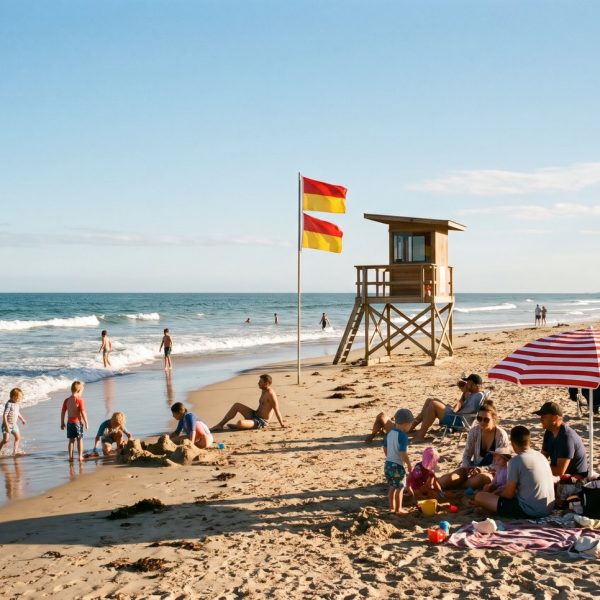
Every summer I watch the same scene play out on busy beaches: a family arrives, spreads out towels, and the kids sprint for the water before anyone has looked at the flags. Most days nothing goes wrong. But the sea does not care how relaxed your holiday is supposed to be, and a few simple beach safety tips can make the difference between a lovely afternoon and a frightening one. None of this needs to spoil the fun. It just means spending five minutes reading the water before you get in it.
Start With the Flags and the Lifeguards
The single best decision you can make is to swim at a beach with lifeguards, and to swim between their flags. On many European beaches a red and yellow flag pair marks the supervised zone, a red flag means no swimming at all, and a yellow flag signals caution. In other parts of the world the colours differ, so take a moment to read the board at the entrance or simply ask the lifeguard what conditions are like today. They know where the water misbehaves, and they are usually happy to tell you.
It also helps to set up your towels within sight of the lifeguard station. If something does happen, help arrives faster, and you will find it easier to give a clear description of where your child was last seen.
How to Spot a Rip Current
Rip currents are responsible for the majority of rescues on surf beaches, and they are easy to miss if you do not know what to look for. A rip current is a narrow channel of water flowing away from the shore, often between sandbars or next to rocks and piers. From the beach it can look deceptively calm, because waves tend to break less where the water is rushing back out to sea.
Look for a darker strip of water among the white breaking waves, a line of foam or debris moving steadily seaward, or a patch where the surface looks rippled and choppy compared with its surroundings. Standing somewhere slightly higher, like a dune or the top of the beach steps, makes these channels much easier to see.
If you are caught in one, the advice from the US National Weather Service rip current safety guidance is worth memorising: do not fight the current by swimming straight back to shore. Stay calm, float to conserve energy, and swim parallel to the beach until you are out of the channel, then angle back towards land. If you cannot escape, face the shore, raise an arm and shout for help.
Beach Safety Tips for Families With Young Children
Children are the ones most likely to get into difficulty, mostly because shallow water feels safe and attention drifts. The rule that works in my own family is simple: one adult is always the designated "water watcher", with no phone and no book, and that role is handed over out loud when they need a break. It sounds formal, but it removes the dangerous assumption that someone else was looking.
Brightly coloured swimwear helps too. Lifeguards say neon pink, orange and yellow stand out in the water far better than blue or green, which disappear against the waves. Agree on a meeting point, such as the lifeguard tower or a distinctive beach café, in case anyone gets separated in the crowd, and write your phone number on a wristband for younger children.
Inflatable toys deserve a mention. Offshore winds can push a lilo or ring out to sea surprisingly fast, and a child holding on may not realise how far they have drifted. Use them only in calm, sheltered water, and keep them tethered or within arm's reach.
Sun, Heat and Hydration
Sea safety gets the headlines, but sunburn and heat exhaustion catch out far more holidaymakers. Apply a broad spectrum sunscreen of at least SPF 30 twenty minutes before you go out, then reapply every two hours and after every swim, even if the bottle claims to be water resistant. The sun is strongest between late morning and mid afternoon, which is a good time for a long lunch in the shade.
A beach umbrella or pop up tent, hats with a neck flap, and UV protective swim tops for children cut exposure dramatically. Bring more water than you think you need, freeze a couple of bottles overnight so they double as ice packs, and watch for early signs of heat exhaustion such as headache, dizziness or unusual tiredness.
Know the Local Hazards Before You Travel
Every coastline has its own quirks. Some beaches have strong tidal ranges that can cut you off below cliffs, others have jellyfish seasons, weever fish in the shallows, or sudden drops a few metres from shore. A quick search before you travel, or a chat with your hotel reception, will usually tell you what to expect. Water shoes are a cheap fix for rocky entries and stinging fish alike.
If you are travelling abroad, it is worth learning a handful of key words in the local language, like "help", "lifeguard" and "dangerous current". Signs are not always translated, and this overview of popular summer travel destinations and their languages is a handy starting point for working out what you will hear on the beach. For ideas on gentler stretches of sand that suit families, our friends have a lovely guide to the best beaches in Cornwall for visitors.
A Calm Day by the Sea
Good beach safety is mostly about habits rather than worry. Check the flags, look at the water for a minute before going in, keep a dedicated pair of eyes on the children, and respect the sun. Do those things consistently and you free yourself to enjoy what you came for: the sound of the waves, sandy sandwiches and that long, salty nap under the umbrella.